

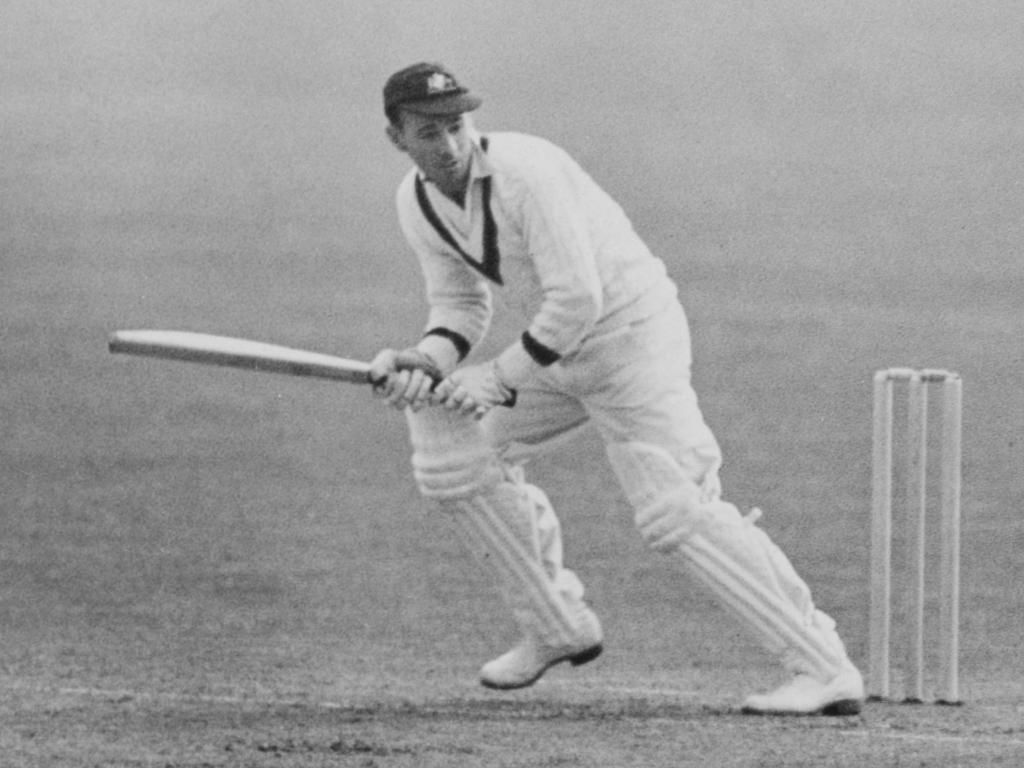
On this day December 7, 1936, Jack Fingleton had a successful 1935-36 tour to South Africa, scoring centuries in the last three Tests. When he made 100 in the Brisbane Test of the 1936-37 Ashes series, he became the first batsman to score four successive Test centuries. In the third Test of that series, he achieved another century. Fingleton was a right-hand opening batsman, whose doggedness, courage and perseverance was there for everyone to see. However, on occasions he was a fluent and attractive stroke maker. A dashing and athletic fielder, he excelled both in the covers and in the leg trap. He scored 112 (Cape Town), 108 (Johannesburg), and 118 (Durban) in the last three Tests in South Africa, then 100 in the first Test against England to complete the sequence and create history.
In 1931/32, Fingleton gained a regular position for New South Wales. He then made his debut in the Fifth and final Test of the season again South Africa and scored a gritty 40 on a tough pitch. The following season, Fingleton won praise for an unbeaten century against the body line attack tour. He took bruises and battled it out showing his class. Fingleton scored four centuries and was the leading run-scorer during the 1934/35 domestic season, earning a recall to the Australian team for the 1935/36 tour of South Africa after which he made the record to score four successive Test centuries.
Fingleton was also an author and wrote several articles of which some of them were critical of even his team mate Don Bradman. He played 18 Tests for Australia scoring 1189 runs at an average of 42. Interestingly he has five hundreds in his career out of which four of them came in a row to create record. He also had plenty of experience in the domestic side playing more than 100 matches. Representing Australia in 18 Tests between 1932 and 1938 he was often known as a gritty and solid player. His partnership with Brown was regarded as one of the great opening pairings in the history of Australian Test cricket. In ten Tests together as an opening partnership, the pair averaged 63.75 for the first wicket, higher than any other Australian pair with more than 1,000 runs.