

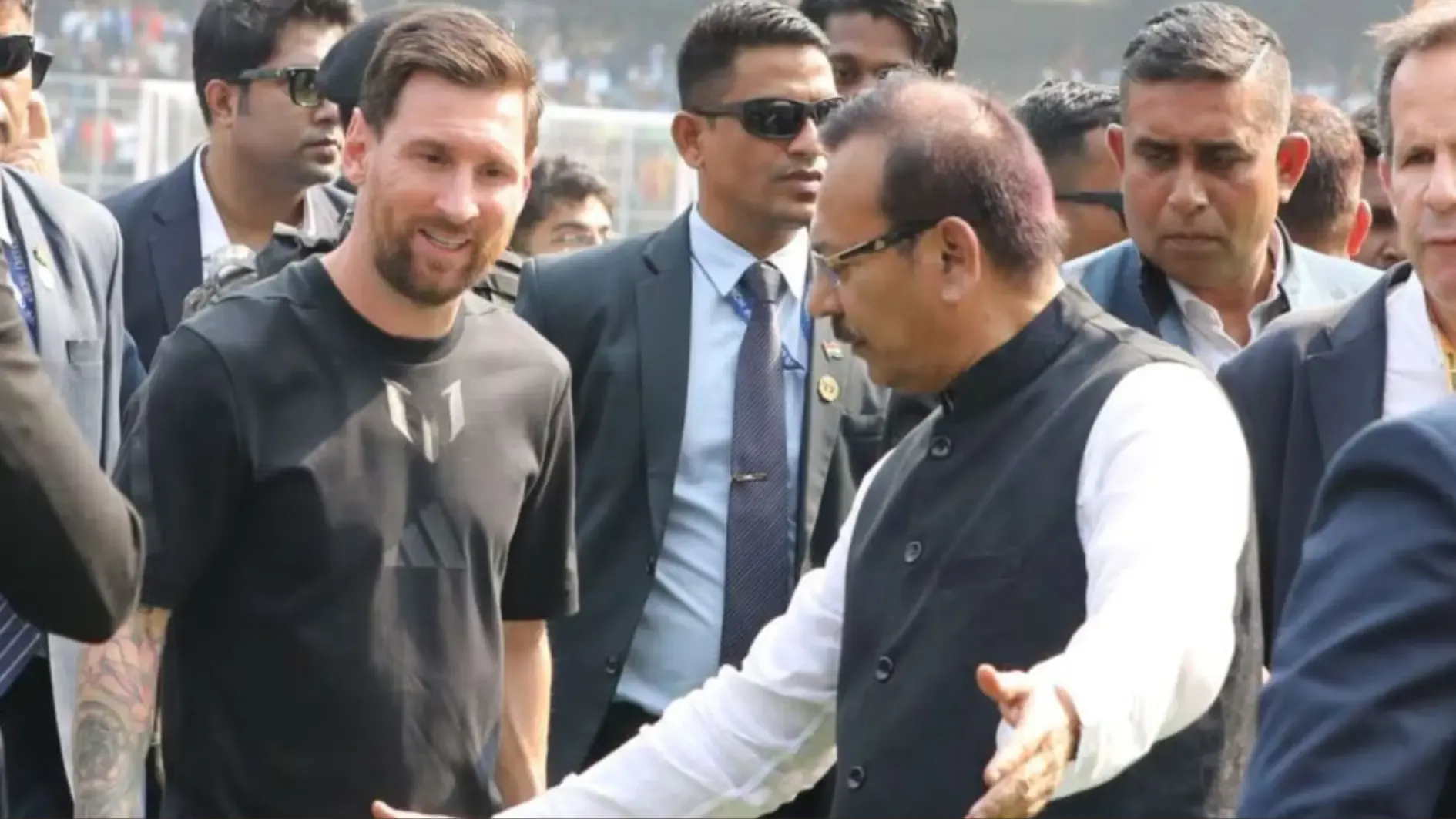
The highly anticipated "GOAT Tour" featuring one of the greatest football players of all time, Lionel Messi was supposed to be a historic moment for sports in India. But it did not go as per the expectations of the fans as they were gravely disappointed. As Messi and his Inter Miami teammates, including Luis Suarez and Rodrigo de Paul, arrived at Kolkata's Salt Lake Stadium, the atmosphere was electric with the hopes of thousands. However, the dream soon weared down when political figures and members of the organizing committee swarmed the pitch. It resulted in effectively barricading the stars from the very fans who had paid exorbitant prices to see them.
The situation spiraled out of control as the stadium's security and authorities failed to manage the surging crowd of VIPs and influencers around the players. Reports suggest that Messi, visibly annoyed by the suffocating proximity of the crowd and the lack of professional boundary. The Argentinian legend departed the venue earlier than expected without the promised fan interaction. This abrupt exit triggered a wave of fury among the spectators as what began as a celebration of football ended in total vandalism. This event ended on a negative note with angry fans booing and hurling bottles and posters onto the field in a display of mass disappointment.
Political interference allegations and VIP culture controversy overshadow Lionel Messi’s India visit
In the wake of the disaster, the event’s organizer, Satadru Dutta, has broken his silence following a 39-day tenure in custody. After being granted interim bail, Dutta took to social media to launch a scathing attack on the political interference he claims sabotaged the tour. His primary target is the former West Bengal sports minister, Aroop Biswas, whom Dutta accuses of using his power to force entry. He allegedly claims that the minister attempted to pave the way for photos with Lionel Messi without prior consultation.
Dutta’s allegations highlight a deeper issue of "VIP culture" overshadowing professional sporting events. Dutta plans to file a defamation case, potentially taking the matter to the Supreme Court. He claims his team was victimized, with ground access cards denied and staff allegedly locked in room to ensure political control over the event. Dutta has promised an upcoming press conference to expose everyone involved in the mismanagement. Ultimately, the resolution of this dispute will likely determine how future international sporting events are coordinated in Kolkata.
As the legal battle looms, the fans remain the ultimate losers, left only with memories of a disaster rather than the presence and interaction of the world’s greatest footballer. For the fans, the hope remains that lessons learned from this "GOAT Tour" will lead to more professional, fan-centric experiences in the country.