


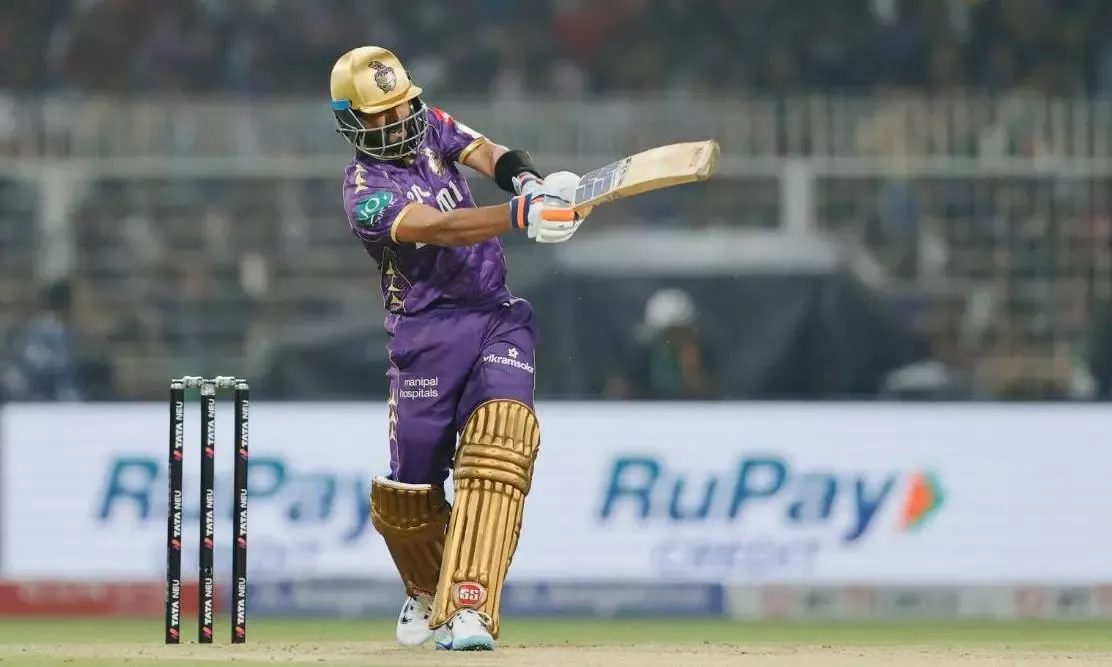
The clash between Mumbai Indians and Kolkata Knight Riders delivered everything a high-scoring IPL encounter promises — big runs, power-hitting, and drama. KKR posted a massive total of 220 runs, setting the stage for a strong defense. However, what followed was an equally dominant chase from MI, who comfortably hunted down the target. Amid all the action, one major talking point emerged — the absence of Cameron Green with the ball.
Despite being one of the most expensive and high-profile all-rounders in the tournament, Green did not bowl a single over in a match where KKR desperately needed additional bowling options. This decision left fans and experts puzzled, especially considering the match situation where every bowling resource could have made a difference.
Addressing the question in the post-match interaction, KKR captain Ajinkya Rahane gave a rather direct and intriguing response: “You need to ask that question to Cricket Australia.” His statement immediately sparked discussions across the cricketing world, hinting at factors beyond team strategy.
The comment suggests that workload management or restrictions imposed by Cricket Australia may have played a role in the decision. In recent years, national boards have increasingly monitored player workloads, particularly for key all-format players like Green, to avoid injuries and ensure long-term availability.
However, this raises a broader concern for franchises. When teams invest heavily in all-rounders, they expect contributions in both departments. Not utilizing Green as a bowler in such a high-pressure game not only limits tactical flexibility but also impacts team balance.
For KKR, the decision proved costly. Defending 220 is never easy, but having an additional pace option could have provided more control or breakthroughs at crucial moments. Instead, MI capitalized on the available bowling resources and completed a successful chase.
Rahane’s statement, while brief, highlights a growing dynamic in modern cricket — where franchise strategies sometimes take a backseat due to international workload considerations. It’s a reality teams must navigate, but one that continues to spark debate among fans and experts alike.