

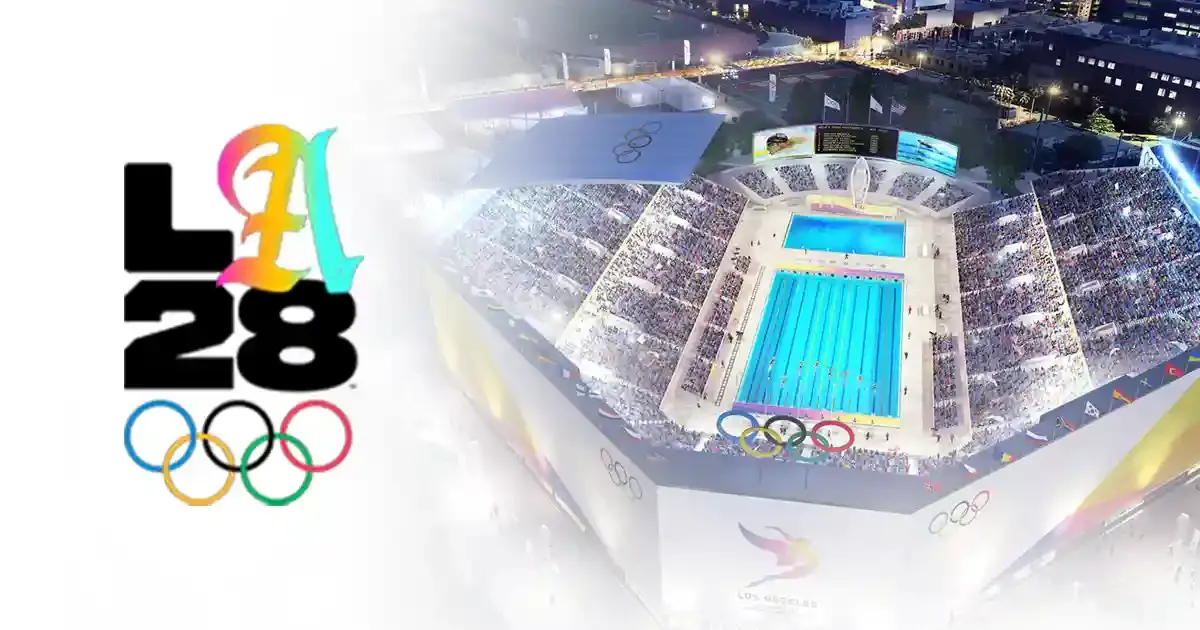
Credit: LA28
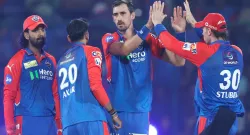
When 34,028 fans packed a purpose-built stadium in Nassau County, New York, to watch India play Pakistan at the 2024 T20 World Cup, something clicked. Across three US venues, 190,000 people showed up in person during the tournament's American leg, and ICC digital engagement from US-based users surged 370% compared to the 2022 edition. More than half of those online visitors were first-time cricket fans.
That kind of growth catches attention. Americans already play at a crypto casino, follow Korean baseball highlights and stream Australian rules football at odd hours. They're primed for new sporting obsessions. Broadcasters know this. And with cricket confirmed for the 2028 Los Angeles Olympics, they're racing to lock down the rights to a sport that, until recently, barely registered on the American media radar.
The Olympic Spark Plug
Cricket's return to the Olympics after 128 years is the single biggest reason this race exists. In October 2023, IOC members voted overwhelmingly to include T20 cricket at the LA Games, confirming both men's and women's six-team tournaments. Matches will run from 12 July to 29 July 2028 at the Fairgrounds Stadium in Pomona, about 50 kilometres from downtown Los Angeles.
LA28 chairman Casey Wasserman described the sport's '2.5 billion rabid fans' and called bringing them to the biggest sports city in the world 'a really powerful combination.' The 2024 T20 World Cup final between India and South Africa drew a peak of 53 million concurrent viewers on Disney+ Hotstar alone. Those numbers were global, but the American piece of that pie is growing every year.
The Olympics give cricket something it has never had in the US: a guaranteed slot on the national sports calendar. Every broadcaster knows casual fans will tune in during the Games regardless of their cricket knowledge. The real prize is capturing those viewers before and after the Olympic window, and that requires owning the rights to the sport's biggest properties today.
Who Owns American Cricket's Screen?
Right now, the US cricket broadcasting market is somewhat split across several platforms, each holding a different piece:
- Willow TV: the IPL, ICC events and India's series
- ESPN+: Major League Cricket unsurprisingly and select international fixtures
- Regional networks: CBS Sports (MLC national broadcasts), NBC Sports Bay Area, YES Network and Bally's
Willow TV, owned by Indian media giant Times Internet, is the most established player. It holds both IPL and ICC rights in the US through deals struck in 2022 and 2023, and it was rebranded alongside Cricbuzz in April 2024 to combine live streaming with news and statistics.
ESPN+ carries Major League Cricket, which is expanding from six to eight teams by 2027. Three MLC franchises are already owned by IPL team owners (Mumbai Indians, Kolkata Knight Riders and Chennai Super Kings), creating a direct pipeline between Indian cricket and the American market. In April 2025, New Zealand Cricket became the first national governing body to invest directly in a foreign T20 league by partnering with MLC for one of the new franchises.
Here's what makes the timing so significant. Both Willow TV's ICC deal and the IPL's current media rights cycle expire at the end of 2027, months before the Olympic cricket tournament begins. Whoever negotiates the 2028 cycle will do so knowing that cricket is about to receive its biggest-ever spotlight on American soil.
ESPN+ carries Major League Cricket, which is expanding from six to eight teams by 2027. Three MLC franchises are already owned by IPL team owners (Mumbai Indians, Kolkata Knight Riders and Chennai Super Kings), creating a direct pipeline between Indian cricket and the American market. In April 2025, New Zealand Cricket became the first national governing body to invest directly in a foreign T20 league by partnering with MLC for one of the new franchises.
Here's what makes the timing so significant. Both Willow TV's ICC deal and the IPL's current media rights cycle expire at the end of 2027, months before the Olympic cricket tournament begins. Whoever negotiates the 2028 cycle will do so knowing that cricket is about to receive its biggest-ever spotlight on American soil.
The global picture adds pressure. In December 2025, JioStar (the merged entity of Disney Hotstar and Reliance's Viacom18) told the ICC it could no longer afford the remaining two years of its $3 billion India media rights deal. India accounts for nearly 80% of ICC revenue, and JioStar's provisions for losses on sports content deals had ballooned to ₹25,760 crore in a single financial year. The old model of paying astronomical rights fees is showing cracks. US rights, by contrast, remain relatively underpriced for the audience they reach, making them even more attractive to platforms hunting for value.
5.2 Million Reasons to Pay Attention
The audience driving all of this has a name and a number. According to Pew Research Center analysis of US Census Bureau data published in May 2025, the Indian American population reached 5.2 million in 2023, a 174% increase from 1.8 million in 2000. Indian Americans are now the second-largest Asian origin group in the country, making up 21% of the total Asian population. Their median household income sits at $151,200, well above the national average.
California is home to 960,000 Indian Americans. Texas has 570,000. New Jersey, 440,000. New York, 390,000. These are the same corridors where MLC franchises are based, where IPL watch parties fill restaurants at breakfast time and where cricket-specific infrastructure is being built.
The broader South Asian American population (including Pakistani, Bangladeshi and Sri Lankan communities) pushes that total higher still. Minor League Cricket's 258% surge in live viewership during its 2025 season shows the appetite is accelerating at grassroots level too.
The 2026 T20 World Cup, co-hosted by India and Sri Lanka, offers early evidence of what's ahead. The ICC reported a 53% jump in video views across its digital platforms from the first six matches, reaching 647 million views. US-based users grew by 49%.
If 5.2 million Indian Americans represent one of the most affluent demographics in the country, and they're already streaming cricket on niche platforms, what happens when a mainstream broadcaster finally builds a product designed specifically for them?
The Innings That Hasn't Been Bowled Yet
The convergence of the Olympics, expiring rights deals, a growing diaspora and global broadcasting upheaval makes 2026 to 2028 the most consequential stretch for cricket in the United States.
By the time the first ball is bowled in Pomona in July 2028, the US cricket media market will look completely different. Rights that expire in 2027 will be renegotiated with Olympic-sized leverage. Platforms that invested early will argue they built the audience. Newcomers will argue the audience was always there, just waiting for better access.
The real winner of this broadcasting war won't be the platform that spends the most. It'll be the one that figures out how to make cricket feel like it belongs in the American sports conversation. With 2028 approaching, can anyone really afford to sit this one out?