


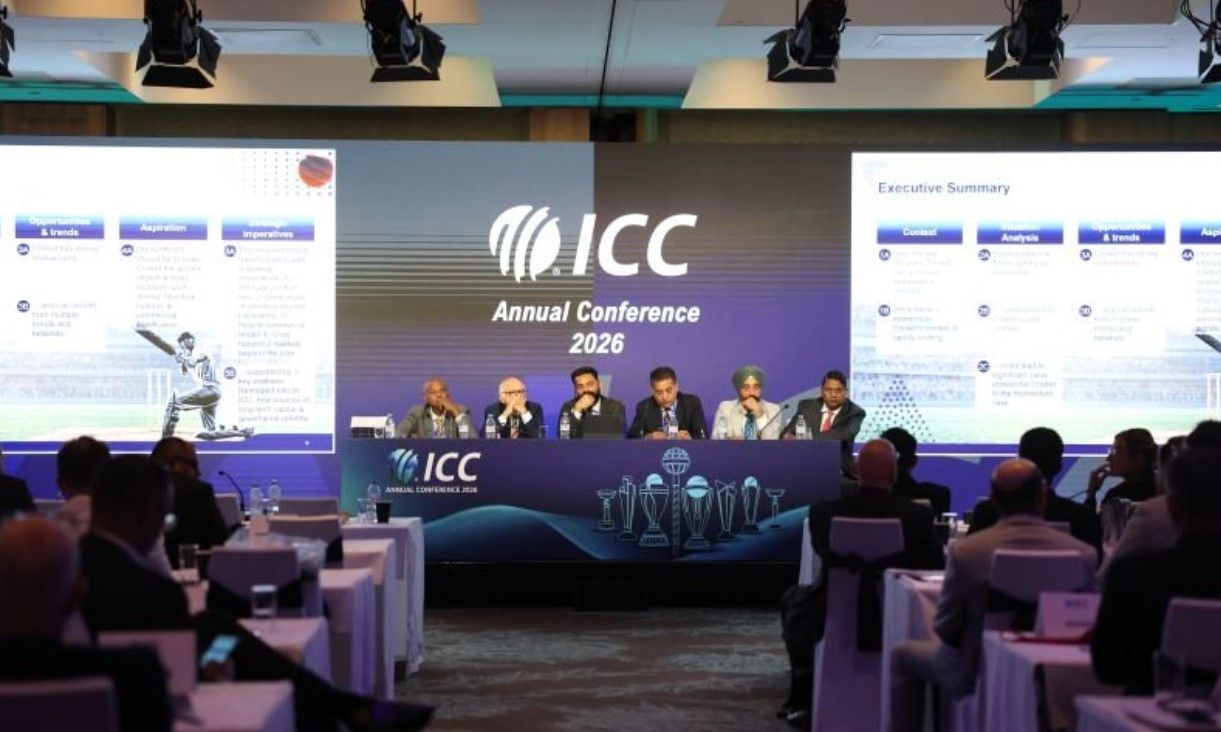
According to reports from Cricbuzz, during the annual conference, the International Cricket Council (ICC) officially rejected proposals to shorten ODIs to 40 overs and expand the World Test Championship (WTC) to 12 teams. Despite media speculation regarding a massive layout overhaul, the governing body chose to lock in current structures while addressing other pressing membership and administrative issues.
Media pitches and external strategy papers had strongly advocated for shrinking the One-Day International format down to 40 overs per innings to improve broadcast appeal. The ICC flatly rejected this change, keeping the standard 50-over duration intact across all bilateral and tournament windows. The board officially put to rest plans to expand the World Test Championship (WTC) to a 12-team event.
Full Members like Afghanistan, Ireland, and Zimbabwe will remain excluded from the primary WTC table for the immediate cycle. Additional structural concepts, including introducing a two-tier Test system, allowing one-Test series to count for WTC points, creating a World Club T20 Championship for franchises, and mandating universal fixed scheduling windows, were completely deferred or dropped without approval.
The ICC enforced strict disciplinary boundaries during the session, addressing administrative discrepancies while simultaneously widening its map. Both USA Cricket and Cricket Canada failed to overturn their active operational suspensions. The ICC determined that both North American boards have continually fallen short of mandatory governance and administrative reform standards.
While the regulatory restrictions remain, the ICC clarified that both national teams can still play in ICC-sanctioned global tournaments. The ICC will directly supervise cricket operations and funding pipelines in those regions to protect players from board-level mismanagement.
ICC Board elections bring major leadership changes
The ICC Associate Member Directors election at the 2026 Annual Conference delivered a historic administrative shake-up, ousting long-serving Deputy Chair Imran Khwaja from the 17-member ICC Board. Five candidates contested three available seats in a highly competitive ballot. Out of 45 Associate nations, 43 were eligible to vote because USA Cricket and Cricket Canada remained suspended due to governance failures.
With each eligible country casting three votes, a total of 129 votes were polled. France’s Gurumurthy Palani topped the election with 35 votes, securing his first-ever board term. UAE’s Mubashshir Usmani and Namibia’s Dr. Rudie van Vuuren both secured re-election with 26 votes each, locking down the final two spots. Conversely, Imran Khwaja of Singapore was eliminated with 23 votes, ending his influential 20-year run on the board, while Malaysia's Mahinda Vallipuram finished last with 19 votes.
Since the ICC constitution dictates that only active directors can serve as Deputy Chair, Khwaja’s defeat forced his immediate exit from the leadership role. ICC Chair Jay Shah acknowledged this massive administrative transition, noting that a subsequent internal vote among board members will decide the new Deputy Chair.
Furthermore, Palani’s promotion to the board has created a vacant seat on the Chief Executives' Committee (CEC), necessitating a separate mid-term replacement election. The newly elected trio will now serve a strict two-year term, carrying a heavy mandate to expand global tournament access and reform funding distribution models for lower-tier cricketing nations.