

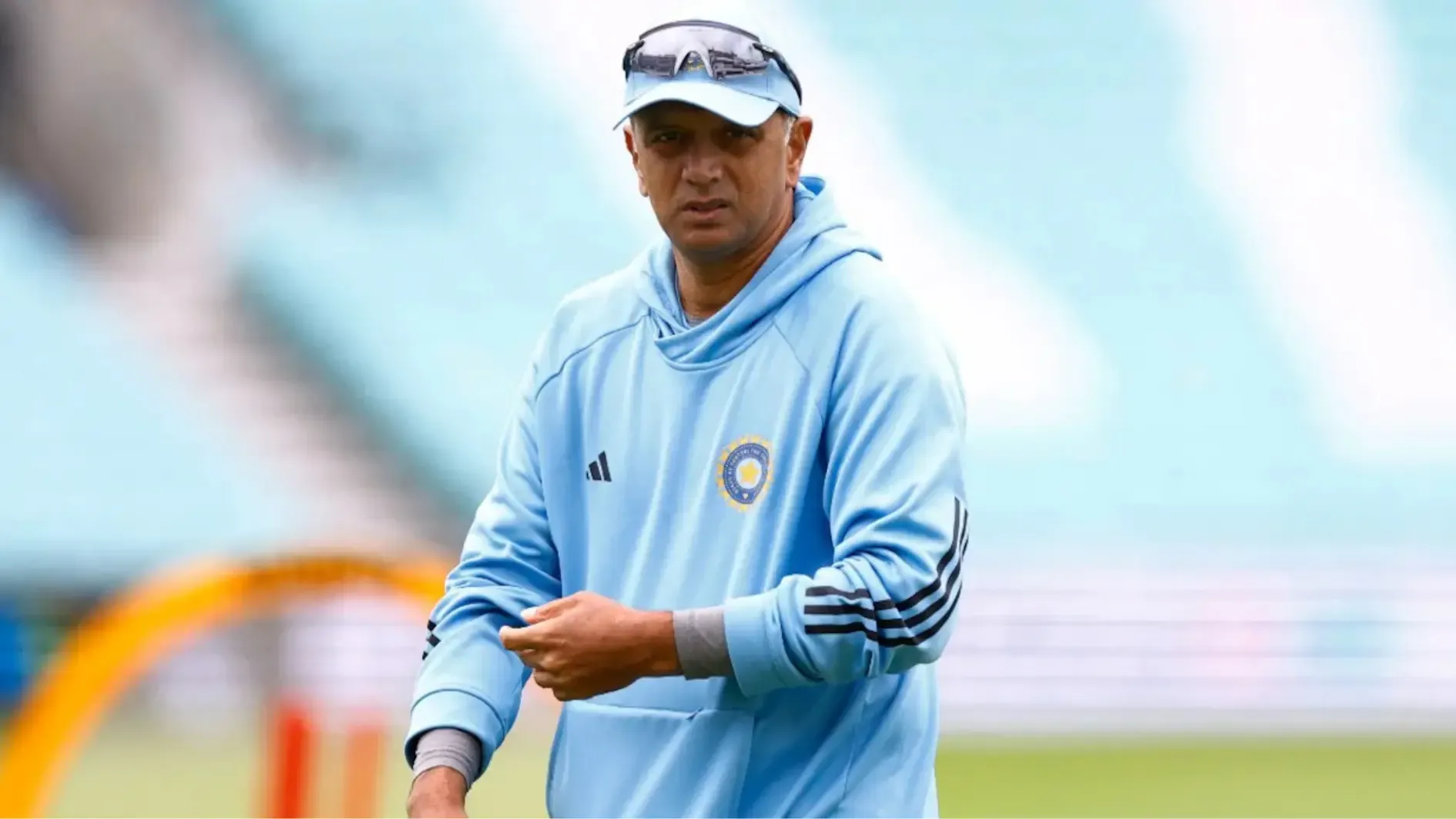
Rahul Dravid has emerged as a surprise candidate to become England's next Test head coach following the sacking of Brendon McCullum. According to a report by The Daily Telegraph, the England and Wales Cricket Board (ECB) has placed the former Indian captain on a shortlist to guide their red-ball team ahead of next year's Ashes series.
The sudden coaching vacancy was triggered by the sacking of Brendon McCullum following a brutal 2-1 home series loss to New Zealand and a dismal stretch of 7 defeats in England's last 9 Tests. Combined with Ben Stokes’ shocking retirement from international cricket just two weeks prior, the "Bazball" era has officially collapsed.
The ECB is moving quickly to fill the void, with chief executive Richard Gould targeting an appointment before the three-match Test series against Pakistan kicks off on August 19. The ECB wants a complete cultural and tactical reset away from McCullum's hyper-aggressive style.
Cricket pundits note that England's hierarchy views Dravid as a structural "saviour" due to specific operational strengths. Dravid has a stellar track record of managing elite transitions, having successfully guided India to the 2023 World Test Championship Final and culminating his international stint with the 2024 T20 World Cup title.
His previous highly praised years managing India's Under-19 and 'A' setups make him the ideal candidate to groom England's next generation of Test batters now that foundational veterans like James Anderson, Stuart Broad, and Ben Stokes are gone.
Rahul Dravid to coach England?! 🏴👀🇮🇳 , As per the report • Following a 2-1 series loss to New Zealand, the ECB has sacked Brendon McCullum as Test coach! ❌🏏 • Indian icon Rahul Dravid has emerged as a shock contender to replace him on a shortlist alongside Andy Flower and… pic.twitter.com/lCrl6o3XX0
— Cricket Guru (@CricketGuru_CG) July 13, 2026
How did Bazball go from revolution to liability?
Brendon McCullum’s famous "Bazball" philosophy initially revitalised England's Test team, but its dogmatic, rigid application ultimately led to his sacking. The primary structural issue was a complete refusal to adapt to match situations. The hyper-aggressive, boundary-seeking approach became highly predictable, allowing disciplined international bowling attacks to easily exploit reckless, low-percentage shot selection. This tactical flaw was starkly exposed during England's 2-1 home series defeat against New Zealand, culminating in a dismal stretch of seven losses across nine Test matches.
Tactically, McCullum's regime lacked technical rigour and nuanced situational planning. The dressing room culture, once highly praised for liberating anxious players, deteriorated into an overly casual, uncritical environment. Underperforming elite batters faced zero internal accountability, which severely stalled the progression of younger talent and left aging veterans structurally exposed. Critical red-ball game management, such as absorbing pressure during difficult bowling spells, building long partnerships, or playing out defensive sessions,was entirely abandoned in favour of blind, unyielding aggression.
Furthermore, this high-risk style proved physically and mentally unsustainable over long series. The relentless team pressure to score rapidly left the middle order incredibly vulnerable to sudden, catastrophic batting collapses. By completely stripping the squad of classical defensive fundamentals and patience, McCullum created an entertaining media product rather than a resilient, winning Test formula. This tactical bankruptcy eventually forced the ECB to abandon the philosophy and aggressively hunt for a disciplined structural reset.