


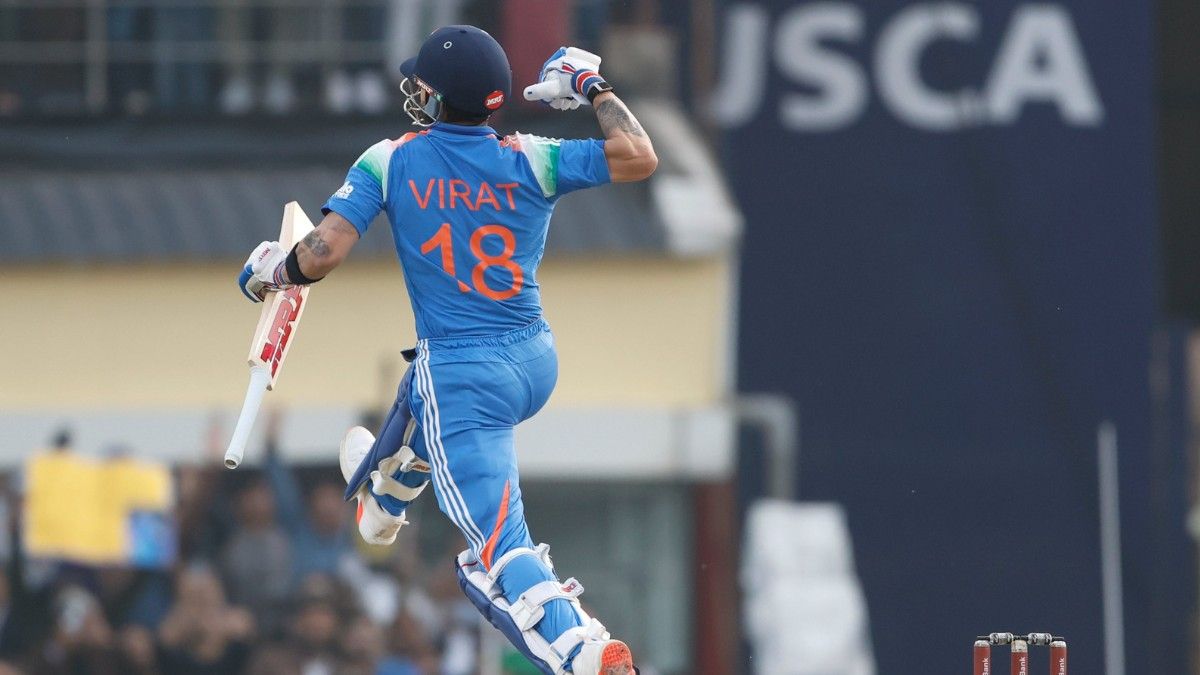
Virat Kohli and Ruturaj Gaikwad’s centuries were eclipsed by a clinical and collective effort from South Africa, as the visitors registered a series-levelling four-wicket win in the second ODI in Raipur. Speaking on JioStar’s post-match show ‘Cricket Live’, JioStar experts Sunil Gavaskar and Dale Steyn analysed Aiden Markram’s temperament, Dewald Brevis’ six-hitting evolution, India’s challenges with a wet ball, and the class of Kohli’s century.
Speaking on ‘Cricket Live’, JioStar expert Sunil Gavaskar spoke about Aiden Markram’s innings:
“I rate that innings very, very highly. Whenever you’re chasing 350-plus, there is always pressure. You want to give the team a good start, not a quiet one, and keep the asking rate under control. The rate was just over seven when they began, and you don’t want that rising beyond nine, especially in the first 10 overs of the Powerplay when only two fielders are outside the circle. With Quinton de Kock, who has a fine record against India, failing again, the responsibility fell on Markram. With his experience of playing in India, in the IPL and otherwise, he understands the conditions well. He took that responsibility on himself. In the previous match he captained because Bavuma wasn’t fit; in Raipur, he did the stabilising job alongside the skipper. That’s exactly what South Africa needed at that stage.”
Speaking on ‘Cricket Live’, JioStar expert Dale Steyn assessed Dewald Brevis’ six-hitting ability:
“There has been a lot of talk about Brevis and his six-hitting ability for a while, even from his Under-19 days. I kept hearing about him and watching him hitting the ball all over the park. Now we’re starting to see it at the highest level. He has that capability, and batters aren’t looking to leave the ball anymore. They have the confidence to clear the rope, not with a slog but with good cricket shots. They train that way. They have six-hitting options to every ball. Brevis is the future. He’s only 22-years-old. If he’s already familiar with chasing 359 at this stage of his career, imagine what it will be like in eight or ten years. This could become the norm.”
Gavaskar explained why the toss heavily influenced the match:
“It was crucial. Just look at how wet the outfield was. Apart from perhaps the first half-dozen overs, the ball was always going to get wet. That affects not just the bowlers but the fielders too, you can’t get a proper grip. The ball feels like a bar of soap. Even when you try for a strong return to effect a run out, it slips out of your hand. That’s why if you win the toss in Indian conditions, you always want to bowl first, so you don’t have to deal with a wet ball when defending. So yes, the toss made a big difference.”
On Virat Kohli’s innings:
“To be honest, at no point did it look like he wasn’t going to get a hundred. From the first ball he faced, it felt as if he was carrying on from Ranchi. He got off the mark with a hook for six, a shot he doesn’t often play in the air, which showed the confidence from his previous hundred. After that, unless something unfortunate happened, the hundred always seemed inevitable. The partnership with Ruturaj was excellent. Ruturaj’s first ball was a tough bouncer from Jansen, coming right after he had dismissed Jaiswal. He managed to put it away for four, and you could immediately see Kohli go down the pitch to comfort him. Ruturaj would’ve been nervous after getting out to a brilliant catch earlier, and whatever Kohli told him clearly lifted him; the next ball he played very confidently off the front foot. Sometimes, it’s not just about your own runs; it’s about how you help your partner. Their running between the wickets, the communication, it was wonderful to see a senior player guiding a younger one at such an important stage.”