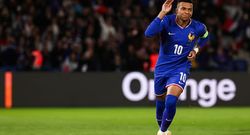


The five weakest squads at the FIFA World Cup 2026, officially designated by FIFA based on the official Men's World Rankings, are New Zealand, Haiti, Curaçao, Ghana, and Cabo Verde. Facing expanded 48-team tournament fields, these five nations enter North America with the lowest international seeding.
5 lowest-ranked squads at 2026 FIFA World Cup
-
New Zealand (Ranked: 85):
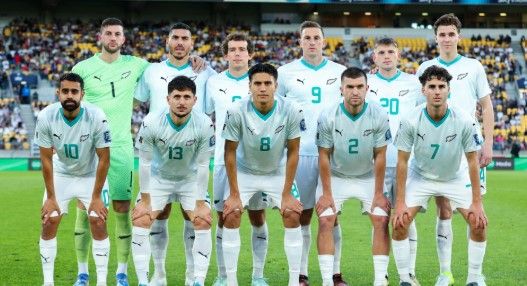
The New Zealand All Whites team, who are ranked 85th in the roster entered the FIFA World Cup 2026 after it was expanded to 48 teams and Oceania got a direct qualification spot in the World Cup. Historically, Rugby has more fanbase in New Zealand when compared to Football which has led to less support and resources for Football as it stands as a direct competition to the nationally loved sports.
The best natural athletes and corporate sponsorships in New Zealand overwhelmingly choose rugby (the All Blacks) or cricket over football. Following Australia's departure to the Asian Football Confederation (AFC) in 2006, New Zealand was left isolated in the Oceania Football Confederation (OFC). They spend four-year cycles playing far lower-ranked Pacific island nations like Samoa, Fiji, and Vanuatu.
This lack of high-intensity competitive match testing severely stunts their tactical growth before major tournaments. Aside from Premier League veteran striker Chris Wood and Serie A defender Liberato Cacace, the vast majority of the roster plays in the domestic A-League or lower-tier Scandinavian and American leagues. New Zealand is placed in Group C along with countries like Iran, Egypt and Belgium.
Belgium is ranked at Number 3 in the World when it comes to football and stands as a direct threat for the All Whites. The All Whites struggle significantly with technical ball retention. Belgium’s elite midfield line will heavily squeeze New Zealand's possession, starving Chris Wood of any service and forcing the team to defend deep in their own box for the full 90 minutes.
-
Haiti (Ranked: 83rd):
Ranked just below All Whites, Haiti is the second team that the Football analysts and experts have labelled as one of the weakest teams of 2026. Haiti’s inability to excel in the sports does not only lie in its resources but also the geopolitical tensions in the state which has led to the dismantling of the domestic league.
Because it is too dangerous to host international matches, Les Grenadiers have not played a true home game on Haitian soil in years. French head coach Sébastien Migné has had to orchestrate the entire national football revival without ever physically stepping foot in Haiti due to safety concerns. Aside from defender Woodensky Pierre (Violette AC), who required a last-minute visa clearance to travel, the entire 2026 World Cup roster consists of overseas-born players or dual-nationals playing abroad.
This complete disconnect makes developing consistent squad chemistry immensely difficult. Haiti pulled off the impossible task of qualifying for the league with intense competition due to absence of direct qualifiers like the USA, Mexico etc. Haiti is placed in Group C with countries, Scotland, Morocco and Brazil. Brazil is regarded as the tournament heavyweights and are ranked 6th in the world. Brazil will turn up to be Haiti’s biggest challenge in the tournament.
Haiti's biggest historical flaw is structural disorganization at the back. Against Brazil's elite, world-class forwards, any lapses in positioning or slow transitional defense will be ruthlessly exploited. Sports analytics models give Brazil a 90.7% win probability for this matchup. Haiti enters Group C with a mere 15.8% chance to advance past the group stage, the lowest individual metric of all 48 tournament teams.
3. Curaçao (Ranked: 82):
Despite qualifying for the FIFA 2026 World Cup, Curaçao still remain one of the weakest teams this season. With a total population of roughly 150,000 residents, Curaçao possesses a tiny domestic talent pool. Finding, training, and sustaining 26 elite, world-class athletes simultaneously from a population smaller than most major cities is a statistical anomaly and also one of the reasons for their lowest world rankings. Even while building momentum, their management has experienced wild, destabilising changes.
Veteran Dutch coach Dick Advocaat resigned right after qualification due to his daughter's severe health issues. His replacement, Fred Rutten, lost consecutive friendlies and fell out with players. In a dramatic turn, Advocaat returned to the helm just weeks before the tournament kickoff, leaving the team with minimal tactical continuity.
Curaçao wrote the ultimate Cinderella fairy-tale, making history as the smallest nation by both population and geographical area to ever reach a FIFA World Cup. Under Advocaat, the "Blue Wave" tore through the early CONCACAF windows, highlighted by massive victories including a dominant 5-1 thrashing of Haiti. Slotted into a high-stakes final qualification group, they never blinked.
They pulled off a massive 2-0 statement victory against regional giants Jamaica in Willemstad. Curaçao are placed in Group E and have Ecuador, Ivory Coast and Germany as their competitors. Curaçao’s biggest threat will be the 10th ranked Germany, whose suffocating, high-intensity counter-pressing system is designed to completely trap low-block teams that attempt to pass out of defensive zones, which could lead to disastrous turnovers.While Curaçao boasts respectable talent like midfielder Tahith Chong (Sheffield United) and the veteran Bacuna brothers, their bench falls off drastically in quality.
Germany features world-class starters and elite substitutes across every single position, executing at the absolute pinnacle of European football.Sports analytics models give Curaçao just a 7% to 9% chance of surviving Group E. Because they must face three teams sitting inside the global top 20.
-
Ghana (Ranked: 74):
Despite being one of Africa’s most historic football nations, Ghana enters the FIFA World Cup 2026 as one of the tournament’s lowest-ranked qualified sides. Once feared for producing elite talents and deep World Cup runs, the Black Stars have struggled with inconsistency, managerial instability, and underwhelming performances in recent international tournaments. Their qualification campaign was heavily dependent on experienced stars like Thomas Partey and Inaki Williams, exposing the lack of depth in several areas of the squad. Injuries to key players, including Mohammed Kudus before the tournament, have further weakened their midfield creativity.
Ghana are placed in a difficult group containing Argentina, Austria, and Jordan. Their biggest challenge will undoubtedly be defending world champions Argentina, whose elite technical quality and relentless attacking movement could overwhelm Ghana’s shaky defensive structure. While Ghana still possess athleticism and physicality, they have struggled badly against organized high-possession teams in recent years. Sports analytics models give Ghana less than a 25% probability of reaching the knockout stage.
-
Cabo Verde (Ranked: 69):
Cabo Verde have become one of the biggest Cinderella stories of FIFA World Cup 2026, but they still enter the tournament among the five lowest-ranked qualified nations. With a population of barely 600,000, Cabo Verde are one of the smallest countries ever to qualify for a FIFA World Cup. Their squad is heavily reliant on diaspora talent developed across Portugal, France, and the Netherlands rather than a strong domestic football structure.
Although the Blue Sharks have shown remarkable growth over the last decade, their lack of experience at the highest international level remains a major concern. Cabo Verde have been placed in Group H alongside Spain, Uruguay, and Saudi Arabia. Their toughest matchup comes against European giants Spain, whose possession-heavy style and technical midfield dominance could completely suffocate Cabo Verde’s defensive setup.
While Cabo Verde possess experienced players like Ryan Mendes and Logan Costa, the squad lacks the overall depth and elite-level quality needed to compete consistently against top-tier football nations. Statistical models currently place their chances of advancing from the group stage below 15%, making them one of the tournament’s biggest underdogs.