


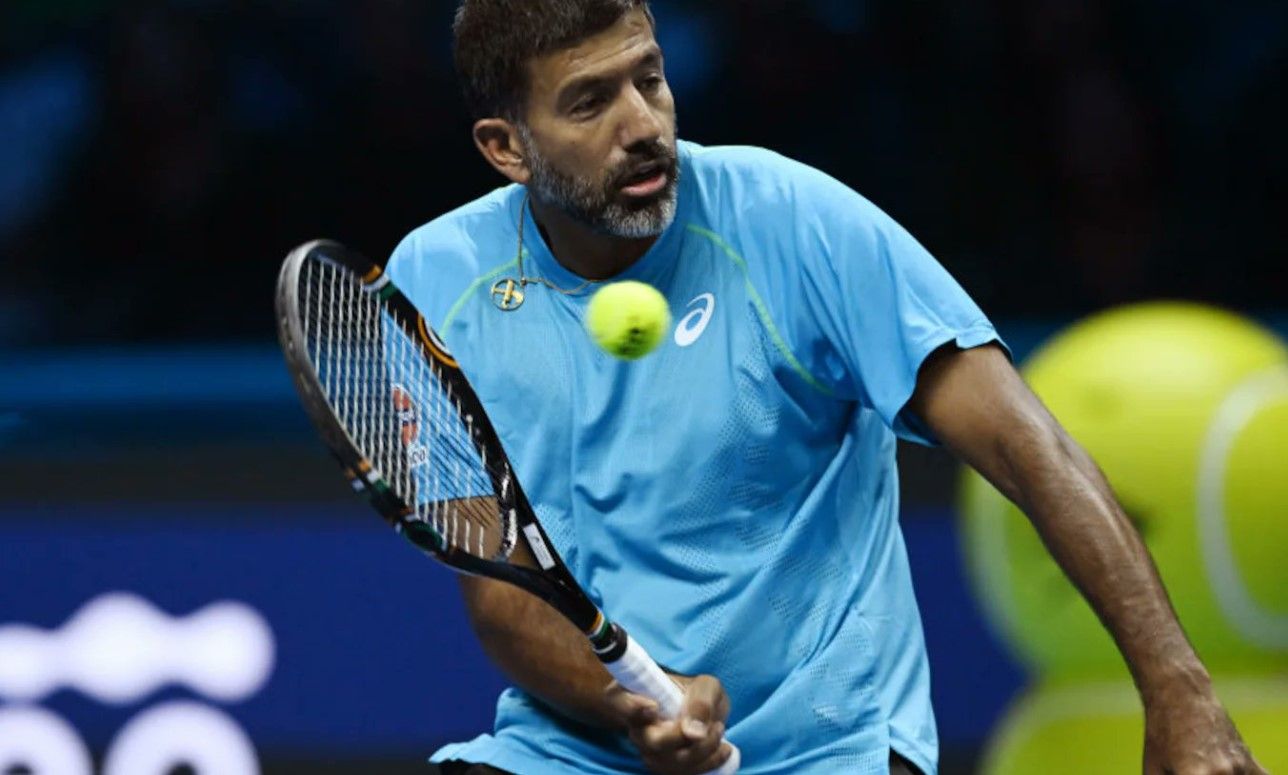
Indian tennis great Rohan Bopanna has spoken out against the decision to trim India’s tennis squad for the 2026 Asian Games. The Sports Ministry removed five names from the 12 players recommended by the All India Tennis Association. Manas Dhamne, Vaishnavi Adkar, Sahaja Yamalapalli, Vaidehee Chaudhari and Prarthana Thombare were left out. The decision has created a debate over rankings, medal chances and how young players are selected. Bopanna believes international performances should have given these players a chance to compete in Japan.
In his LinkedIn post, Bopanna wrote, “I'm a proud Indian. And today, I want to speak up for these tennis players who deserve better. They didn't ask for mercy. They asked for a chance.” He added, “Dhamne. Adkar. Yamalapalli. Vaidehee. Thombare. Five players — including India's No. 1 and No. 2 in women's singles, who earned their rankings the hard way. No shortcuts. No favors. They competed internationally, qualified and proved where they stand.”
Questioning the selection process, he asked, “If outcomes are already decided, why have qualification at all? Why rankings?” He also said, “Sport is the one arena where belief outruns prediction, where the written off rewrite the script.” Bopanna ended with a clear message, “Let them walk onto the court. Let their years of work count for something. Let sport decide. Not a spreadsheet.”
“The idea was to send a lean contingent”: Sports Ministry defends Asian Games selections amidst growing criticism by former players
The Sports Ministry’s decision to cut India’s tennis squad for the 2026 Asian Games has sparked a debate over merit and opportunity. The ministry reduced the proposed 12-member squad to seven, leaving five players out. The names include Manas Dhamne, Vaishnavi Adkar, Sahaja Yamalapalli, Vaidehee Chaudhari and Prarthana Thombare. The decision has drawn criticism because some of these players had earned their rankings through international competition. AITA had also backed their inclusion, arguing that the Asian Games could give them valuable experience for future events.
The ministry, however, has defended its decision by pointing to the selection rules announced in September 2025. A ministry source said, “A lot of pressure was there (on us). Some parents came and said that ‘my child has not been selected.’ We told them if your child merits selection (fulfils the criteria), there is no way that he or she will not be selected.” The source added, “The idea, from the very beginning, was to send a lean contingent. The criteria was announced a year ago, and everyone had the time to figure it out and qualify.” The ministry also questioned sending athletes without realistic medal chances. “If somebody has to run inside 10 seconds to be a contender for a medal in the 100m event, should we send an athlete who clocks 15 seconds?” the source said.