

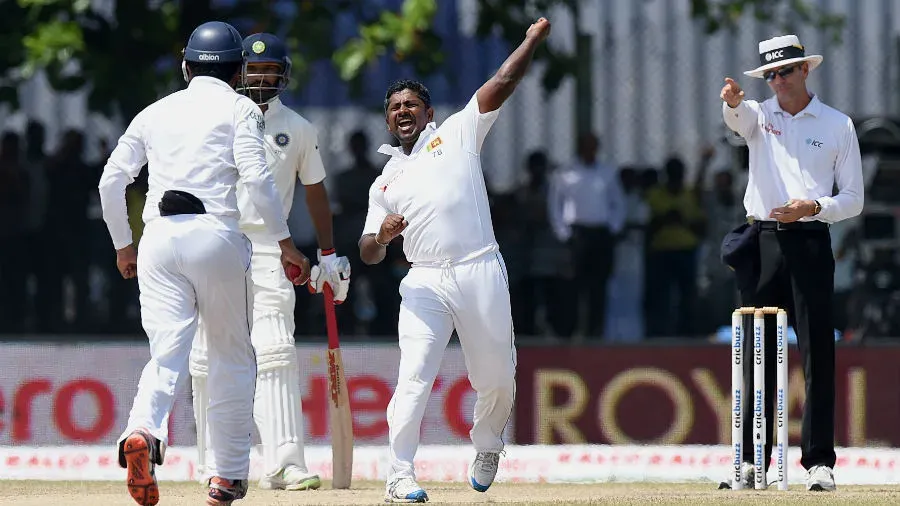
Shubman Gill’s men will play two red-ball matches in the second half of August (Aug 15-27 window), as part of the ongoing ICC World Test Championship cycle. These two matches will be extremely important for India as part of the World Test Championship 2025-2027 cycle. This is India’s first away test since the disastrous 2024-2025 Border-Gavaskar Trophy against Australia.
According to reports, one of the test matches can be played at Galle. Although no official confirmation has been provided on this, according to multiple media sources Galle would be one of the venues.
India has four Tests left in the WTC cycle: two in Sri Lanka (August) and two in New Zealand (October-November). To realistically qualify for the WTC final, India likely needs to win at least three of those four matches. A 2-0 sweep in Sri Lanka would put them in a strong position heading into the New Zealand tour.
India doesn’t have a good record in New Zealand, and that is the reason it is critical to get points in the Sri Lanka tour.
Overlapping Schedules might create confusion in Team Selection
Let us have a look at India’s calendar after the IPL ends on May 31:
-
June: One-off Test and three ODIs vs Afghanistan (India)
-
Late June: T20I series vs Ireland (Dublin)
-
July 1-19: Five T20Is and three ODIs vs England (UK)
-
Late August: Two Tests vs Sri Lanka (Sri Lanka)
-
September: Asian Games cricket (Nagoya, Japan)
-
October-November: Two Tests and white-ball matches vs New Zealand (NZ)
-
December: Three ODIs and three T20Is vs Sri Lanka (India)
In this jam-packed schedule, it would be a challenge to maintain workload management and make selections accordingly. The change in mindset, mostly from white ball cricket to red ball cricket, is definitely going to be a challenge for the team and the BCCI.
Shubman Gill will be captaining the side, and vice-captaincy will likely go to either Rishabh Pant or Jasprit Bumrah.
There were also talks about a three-match T20I series to be added in Sri Lanka along with the test, but that is not confirmed or in threat as India already has a crowded window in the second half of 2026.