

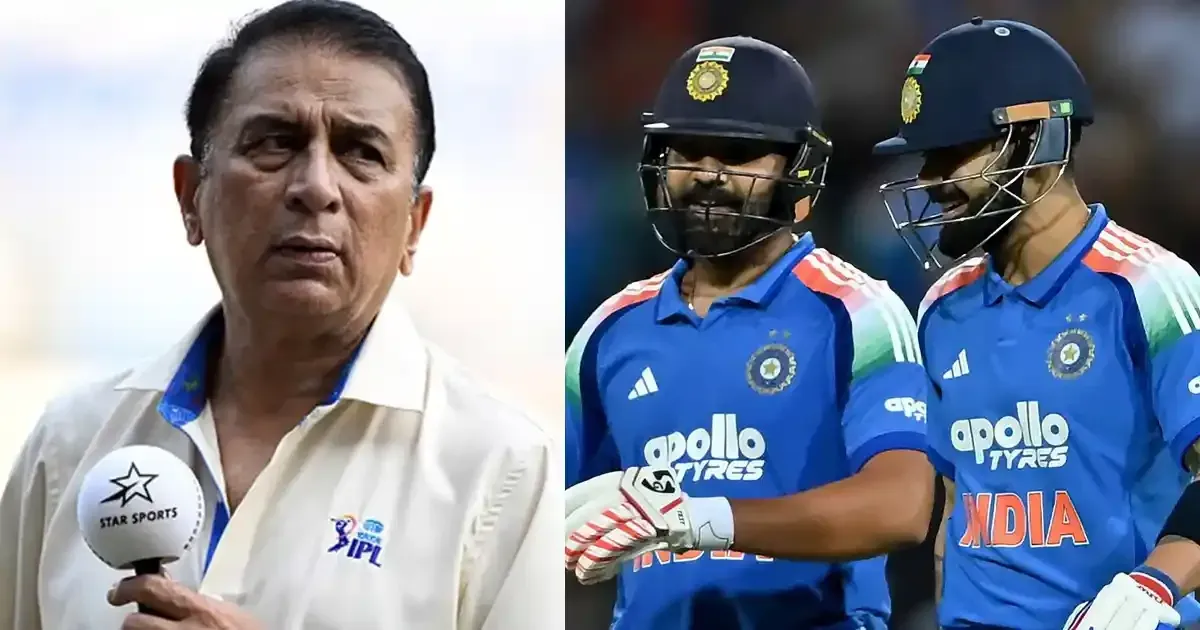
New Zealand recorded their first-ever ODI series win in India and had to wait 37 years to achieve the feat after the visitors sealed a 2–1 series win with a 41-run victory over Shubman Gill and Co. at Indore. Simon Doull and Sunil Gavaskar analysed New Zealand’s composure, India’s shortcomings, and Virat Kohli’s mindset and professionalism.
Simon Doull weighed in on New Zealand’s ODI series win over India:
“This is a special performance. The guys who stood up were Daryl Mitchell, Jayden Lennox and Kristian Clarke. Especially Jayden and Kristian, as both are on their first tours, made their debuts at different stages of the series, and they’ve stood up and stood tall. When you develop players on a tour of this magnitude, in front of these kinds of crowds, that’s when you really find out what they’re made of. It also shows how strong New Zealand’s development system is, from domestic cricket through to the first-class level, that you can bring players into this environment and have them perform on the big stage. I’m absolutely chuffed for all of them. For Daryl Mitchell, all his previous hundreds against India had come in losing causes, but the last one in Rajkot and another big one in this game came in a winning cause. The tide is turning for him as well. To lose seven ODI series in a row here shows just how hard it is to win in India. These guys have managed to do it, unlike anyone else. It’s a brilliant performance.”
On Virat Kohli’s century at Indore:
“New Zealand would have been nervous the entire time Virat was at the crease. He was the one guy who could take the game away from them, and for long periods it looked like he might. It was a brilliant innings. He came in relatively early and lost five different partners along the way. Those partnerships later on with Nitish Kumar Reddy and Harshit Rana were important as well. Some of the shots were just crisp and clean. Beyond that, it’s how he maneuvers the field and how he runs between the wickets. There’s still an air of youth about him. Despite his age and experience, he’d probably still be the fittest guy in that side. That’s professionalism. The willingness to keep trying to win games, to drag your team back into the contest when they’re so far behind, and to run as hard as he does, for his own runs and for his teammates. There’s so much to love about how he’s playing at the moment. May he stick around in international cricket until he’s 44 or 45 years-old.”
Speaking on ‘Amul Cricket Live’, JioStar expert Sunil Gavaskar spoke about what went wrong for India during their chase:
“Once New Zealand got past 300, it was always going to be tough for India to chase. If the target had been around 290 or 300, it might have been possible. But when you lose someone in good form like KL Rahul, and you have Nitish Kumar Reddy, who hadn’t really done justice to his ability until this innings of 53 runs and then Harshit Rana, someone you are never quite sure what you are going to get, it becomes an uphill climb. That’s exactly what India found. Unless Virat Kohli got substantial support, it was always going to be difficult, and he got very little of it. The real problem for India throughout the series has been the starts. As they say, well begun is half done. India never began well, and that’s one of the main reasons they weren’t able to chase these big scores.”
On Virat Kohli’s mindset and consistency:
“The thing about him is that he’s not tied down to an image. A lot of batters and bowlers are constrained by how they’re perceived, and they feel they must live up to that image. Virat isn’t like that. He’s tied to the job at hand, and that job is to score runs. Sometimes, that means starting watchfully and then opening up. Sometimes, it means attacking early and then spreading the field and picking up ones and twos. He’s not governed by expectations of how he should play. That temperament is the key. He doesn’t think, ‘I’m expected to hit a six.’ He plays according to the situation. He never gives up. Even till the end, he was trying. Perhaps, the gloves got a bit sweaty and the grip went slightly, which is why the bat face turned and he was caught near the boundary ropes. For youngsters, that’s the biggest lesson, don’t live up to an image. Play the situation, and you’ll be far more consistent than you ever imagined.”
On Harshit Rana’s lower-order contribution:
“It was a very good innings by Harshit Rana. He batted exactly like a lower-order batter should, without worry and without expectations. He knew his job was to swing the bat. If he connected, great, if not, no worries. There were short balls he tried to slice but didn’t quite get hold of, and that didn’t frustrate him. He understood that if you pitch it up, he can hammer it, and if you bowl it halfway down where the ball is coming nicely, he can hit you for a six. That’s exactly what he did. What impressed me was that Harshit didn’t get hassled by earlier failures, especially with someone like Virat Kohli at the other end. How many people get the opportunity to bat with a Kohli or a Tendulkar? You want to savour every moment and stay there as long as you can. At the end of the over, when such great players talk to you, maybe say ‘keep going’ or ‘that was a good shot’, those are memories you carry for life.”