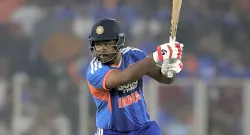



Former South African cricketer Herschelle Gibbs strictly criticized India's young batters specifically targeting 15-year-old debutant Vaibhav Sooryavanshi, for their reckless and rushed batting approach during India's July 2026 T20I bilateral series in England.Gibbs publicly questioned why India's next-generation talents are failing to adopt the foundational game-pacing and tactical awareness of Virat Kohli. Gibbs shared his frustration regarding the impulsive and overly aggressive batting temperament of the young Indian batters. Gibbs replied to a X (formerly, Twitter) post where he questioned the Indian batters’ approach while chasing against England, "Did these guys not learn anything from Virat? He always gave himself a chance when chasing or setting, never rushed.” Gibbs highlighted Kohli's masterclass in pacing an innings and building a foundation, contrasting it against the modern impulse to attack from the very first ball without assessing the match situation.
Did these guys not learn anything from virat ? He always gave himself a chance when chasing or setting, never rushed.
— Herschelle Gibbs (@hershybru) July 8, 2026
Herschelle Gibbs explicitly expanded on this critical tactical flaw on X, noting that modern batters are completely ignoring the basic physics of building an innings.Gibbs reiterated that when a target is highly manageable, trying to blast every ball over the fence instead of "getting in" first is simply reckless cricketing intelligence. The South-African coach wrote, “The target wasn’t big ,all their batters showed no patience of getting in first. Golden rule , you can’t score runs if you don’t get in”. According to him, the target was not very big that the players had to start hitting from the first ball, and that they had to follow the ‘golden rule’ of playing a T20I match is that they need to get into the match, make themselves accustomed to the pitch and then start hitting big.
The target wasn’t big ,all their batters showed no patience of getting in first. Golden rule , you can’t score runs if you don’t get in😉
— Herschelle Gibbs (@hershybru) July 8, 2026
England expose India's tactical flaws with clinical T20I series display
England delivered a masterclass in clinical, disciplined cricket during the July 2026 T20I series against India. Their bowling unit exploited the conditions perfectly, capitalizing on the reckless, over-aggressive approach of the young Indian top-order. Rather than being flustered by early boundaries, English bowlers maintained strict lines and variations, setting smart tactical traps that induced rushed shots from prodigies like Vaibhav Sooryavanshi.
By keeping the scoring targets highly manageable and choking India's run rate through the middle overs, England completely dominated the tactical battle. Their experienced leadership read the young opposition's impatience perfectly, turning what could have been high-scoring contests into systematic, low-risk victories. It was a textbook display of situational awareness and suffocating pressure.
India’s performance during the T20I bilateral series in England was defined by reckless aggression, tactical impatience, and structural collapses. Under new captain Shreyas Iyer, the youthful batting unit faced severe criticism for entirely abandoning foundational game management.The critical vulnerability was highlighted during the 3rd T20I at Trent Bridge, where India crumbled to a catastrophic 76 all out in just 11.4 overs, resulting in a heavy 125-run defeat and a 2-0 series deficit. Despite raw boundary-hitting power from teenage prodigy Vaibhav Sooryavanshi (who hit two sixes in a 5-ball cameo), the top-order repeatedly gifted their wickets away. Five wickets fell inside the mandatory powerplay due to blind swinging against moving deliveries, prompting Herschelle Gibbs to blast their complete lack of patience.