

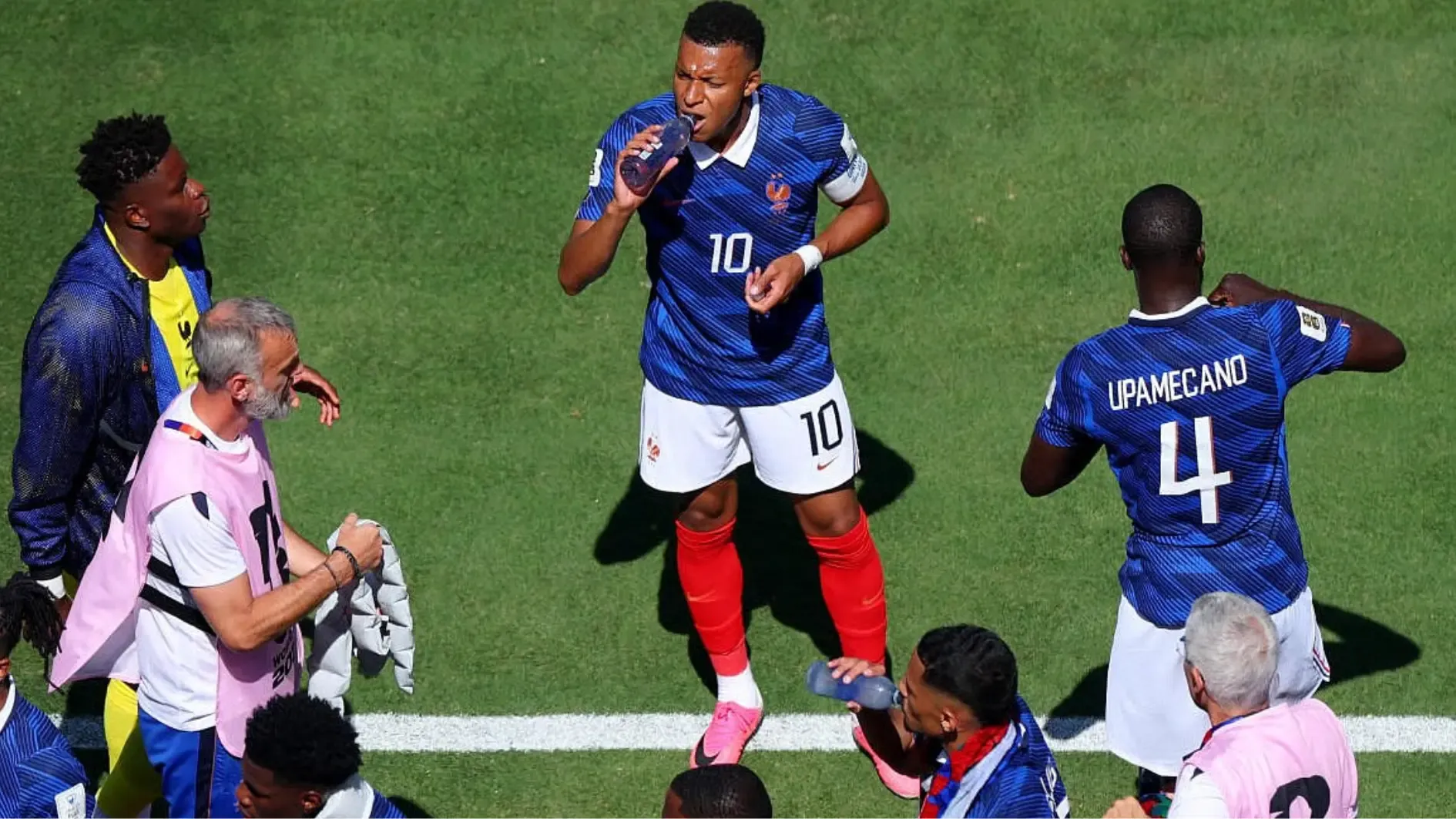
The 2026 FIFA World Cup has introduced a new system as a part of the game, called the “hydration breaks”. This new rule helps players tackle the extreme conditions that they are playing in by giving them 3-minutes to catch their breath and hydrate themselves. It happens in the 22nd or 23rd minute in the game midway into the first half and midway into the second half. This move by FIFA has come as a result of the complaints of players from the previous year’s FIFA Club World Cup as some of them stated they felt sore and dizzy in the game. While some of the players have taken it as an advantage, the viewers and some players have viewed it critically.
The ultimate idea behind the introduction of two more breaks in the game is to ensure that players don't get completely exhausted before the completion of the 45-minutes of play. However, this 3-minute break would mean a lot more than just the intention stated by the lawmakers. This gives broadcasters an opportunity to place their ads in between which could increase their ad-revenue as well. Along with that, such breaks have been termed as momentum breaks by the experts as it could have an inverse effect on the side leading the game and the side that is trailing behind.
The hydration break in the second half between Spain and Saudi Arabia was met with boos in Atlanta. It is not the first time that fans at the Mercedes-Benz stadium have voiced their displeasure at the pause in play... pic.twitter.com/D1oUeITxO4
— The Athletic | Football (@TheAthleticFC) June 21, 2026
🚨 𝗡𝗘𝗪: During Mexico vs South Africa, the referee had to keep the players waiting during the cooling break because FOX was still on a commercial break. The match eventually resumed while FOX was still showing advertisements. These cooling breaks are not related to player… pic.twitter.com/NLCjSHUEcu
— The Touchline | 𝐓 (@TouchlineX) June 12, 2026
FIFA backs hydration breaks with welfare over mercenary
The foundation for the idea of hydration breaks itself originated from last Summer’s FIFA Club World Cup in the United States of America, where the players were critical regarding the heat. Enzo Fernandez claimed that he felt dizzy while playing in such dangerous climates and Enzo Maresca, the Head Coach of Chelsea, stated that he had to cut-down practice sessions due to the weather. With complaints piling up on the weather, the organizing body were determined that they couldn’t just sit back and let it happen and that is the origin of the idea as a whole.
The reason for the criticism would vary from the coaches and players to the viewers watching it from home. The viewers claim that this decision is to fit in some advertisements during the match and to increase their revenue. Some of them claimed that not all weather conditions were particularly dangerous and the games that were played in controlled conditions under closed roofs shouldn’t be given the break. FIFA argued that they aim to keep the uniformity of the fixtures across all 104-games in the tournament and they didn’t want to have any exemptions.
"Hydration breaks are a bit interesting, because I was obviously watching almost all the games up until today, and every time going to commercials is a bit ... Not really that I like it.
"I think for the neutral watchers on TV it's also not great. If it's really hot, obviously it would be good to put them in. But I think you have to look at it in every game, separately, in my opinion. But I think I've said enough already for that," stated Virgil Van Dijk regarding the hydration breaks.
The positive effects of the same were stated by some of the managers including Julien Nagelsmann who said that the 3-minute break gave them a moment to restructure themselves. Germany were facing a solid performance from the FIFA World Cup debutants, Curacao and the hydration break really turned things around for them. One of the most celebrated managers in world football, Carlo Ancelotti also claimed that it gave the coaches an opportunity to have a word with the players and to make some tactical adjustments.
The decision regarding the hydration breaks could be justified with the weather conditions and the uniformity that FIFA proposes to maintain across all 104 games. Broadcasters have been advised to not display their commercials within 20 seconds of the start of the hydration breaks and to shift back to live action 30 seconds prior to the start of action. Just like any new decision or move, the hydration breaks have also split the footballing word into two halves of opinion.