

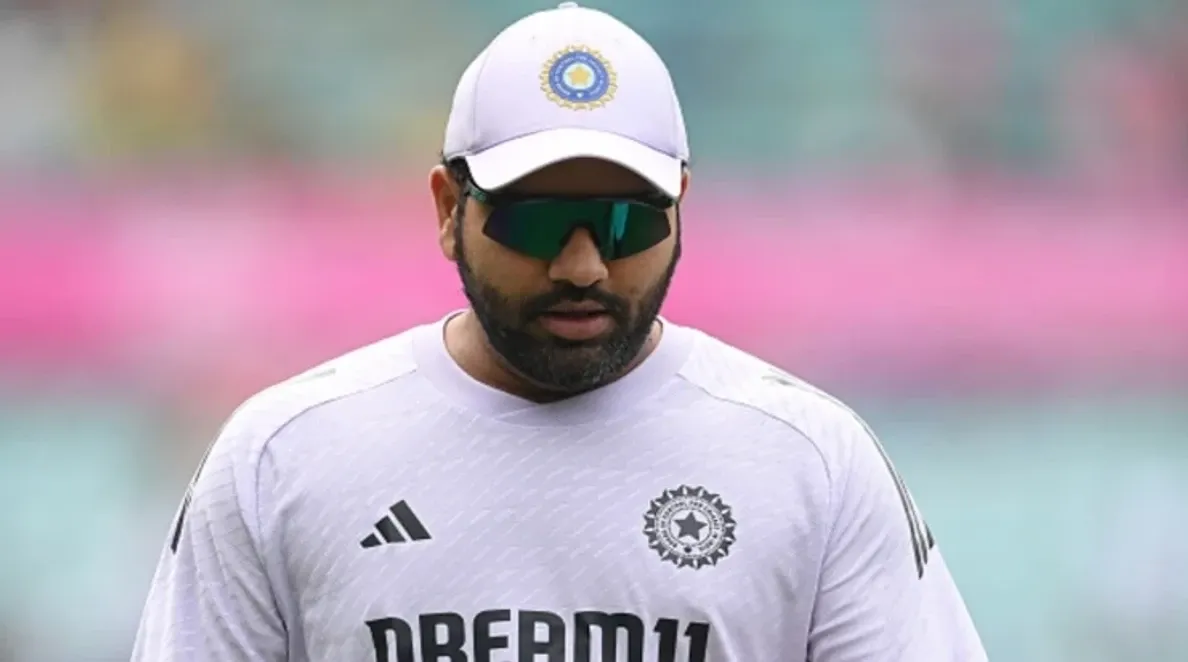
India’s 2024 ICC Men’s T20 World Cup winning captain Rohit Sharma sat down with Jatin Sapru on 'Captain Rohit Sharma’s Roadmap for T20 World Cup' and spoke about the emergence of Tilak Varma, the importance of flexibility in the batting order and driving the change in approach during batting collapses in knockouts.
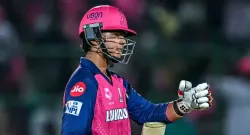
Rohit Sharma highlighted Tilak Varma's eagerness to play in tough situations and praised his attitude:
“The first time Tilak Varma came into our Mumbai Indians setup, I could sense that there was something different about him. What attracted me was his constant conversation that came from a very innocent place, but it made a lot of sense. Whenever he spoke to me, he would just say, ‘I’ll do it. Please send me up the order, I’ll do the job.’ I’m talking about the 2022 and 2023 seasons, when I was captain. He has that mindset and attitude, which is superb, and he is mad about cricket. And most importantly, his temperament, that knock in the Asia Cup against Pakistan was unbelievable. So much pressure, wickets falling at the other end, so much noise in the stadium, a tournament final no less. I know it’s still early days, but he is showing that he is a big-match player. Whenever the team is in trouble, not just once, he has gotten them out of trouble a few times now.”
On the importance of flexibility in the batting order:
“When it comes to flexibility, people need to understand what it really means and how to use it properly. Out of the 11 players you play, you have eight or nine batting options. The two guys at the top will stay constant, since they are the openers. After that, you just need a little bit of flexibility in terms of making people understand that certain changes can happen in the batting order. But I have always believed there’s no need to disturb the top three. After that, who is coming on to bowl? If the batter going in next doesn’t have a good record against him, then let’s send another one who can take him down. That’s where the match-ups come in. I believe in match-ups. It’s not like during the match we make all these changes. Before the game, we used to sit and discuss these things with the players. Rahul bhai (Rahul Dravid) also loved discussing all this. We conveyed to the players the possibility of certain changes in the batting order, that 'you have to be ready.' Nobody had any problems, because at the end of the day, you can’t come into Team India saying that you can only bat in one position, then it becomes a little difficult to manage.”
On having the right intent while batting in the knockouts even when there is a collapse:
“I’ve always believed that I would only make changes in the batting order, when I genuinely felt it was necessary. We have not been winning finals or semi-finals, but the batters were doing the job. They were doing what had been asked of them. Yes, that little extra yard we needed to go, all of us needed to go, that wasn’t happening. And according to me, that little extra was the mindset. When you’re 20 for 3, what do you do? The batters in the middle, number five and six, what do they do in that situation? That was the only thing I had to change. It’s fine if 20 for 3 becomes 20 for 4. We were not able to get through with that rebuild philosophy. Get dismissed for 50, no problem, but we will play with the right intent. And once we find that right tempo, we will carry that tempo till the end of the game."
On throwing out the rebuild philosophy from players' minds, while giving the example of the ICC Men's T20 World Cup West Indies & USA 2024 Final:
"That fear of getting out, I just wanted to throw that out. At maximum, what will happen? We didn’t win the World Cup in 2023, and we won’t win it in 2024 either. But thinking, ‘Oh, this is a World Cup game,’ or, ‘Oh, this is a World Cup final, we have to get to some score,’ wasn’t going to cut it. We had tried everything in the last 10 or 11 years, but nothing happened. What will I do with a score of 120, or 140-150, with that rebuild philosophy? I wanted us to get to 170-180. I know it’s difficult, but if I think about it and try to get there, then there’s a good chance it might happen. If you look at the final, that is exactly what happened. We were 30 for 3. The two guys in the middle, Axar Patel and Virat Kohli, had a brilliant partnership. Eventually, we ended up with 176, which, according to me, was a good score. I wouldn’t say it was a winning score or a bad score; it was a good score. And with the bowlers that we had, I thought we could defend it.”